Autobiography Of Narendra Modi Pdf Download
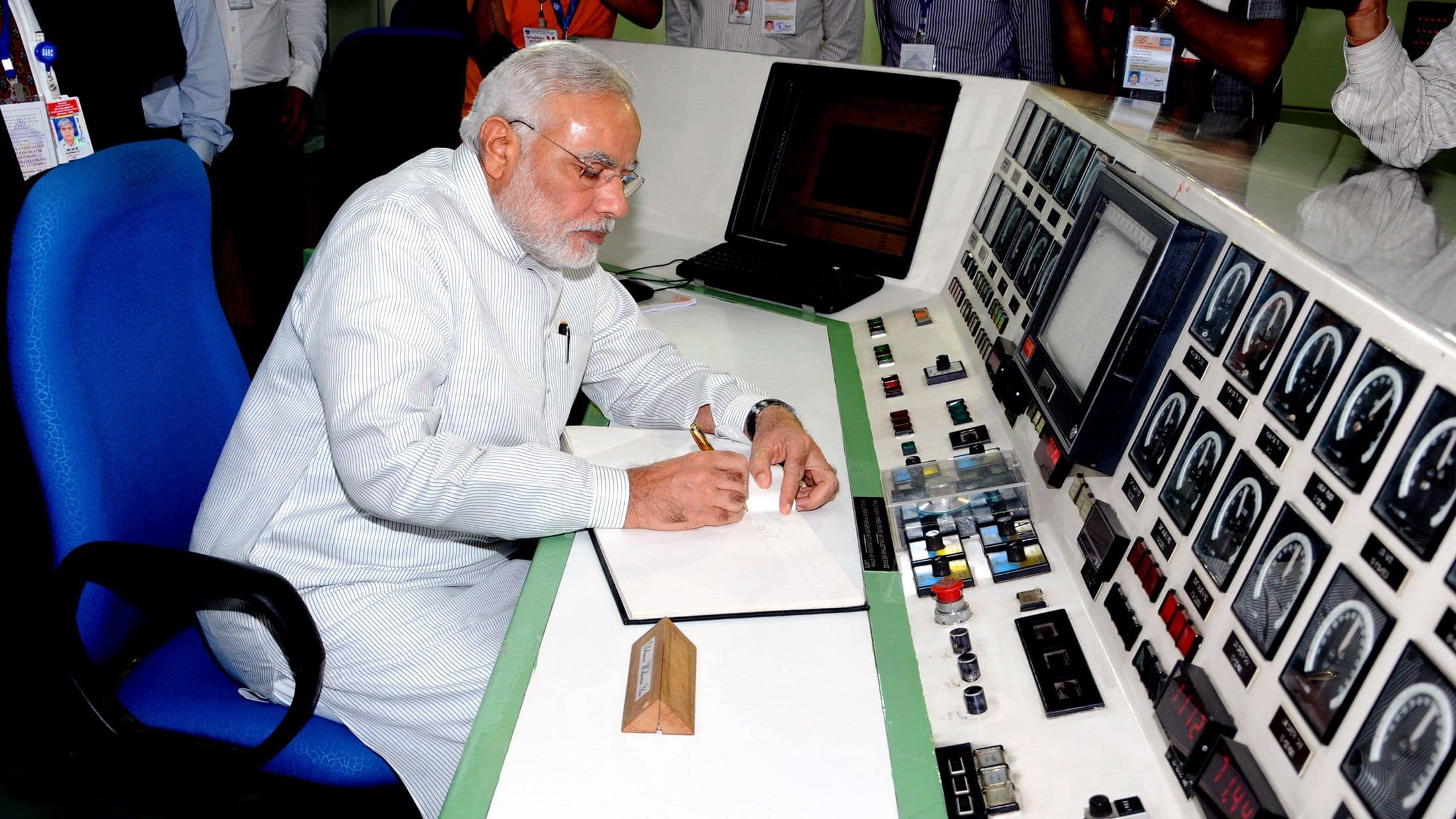
Narendra Modi is best known for rising from humble beginnings to become prime minister of India. Synopsis Narendra Modi grew up in the town of Vadnagar in India, the son of a street merchant. He entered politics as a youth and quickly rose through the ranks of Rashtriya Swayamsevak Sangh, a Hindu nationalist political party. Modi later joined the mainstream Bharatiya Janata Party in 1987, eventually becoming national secretary. In 2002, he was alleged to be responsible for the deaths of more than 1,000 Muslims during civil unrest but was later exonerated. In 2014 he was elected prime minister of India.
Background Narendra Modi was born in the small town of Vadnagar, in northern Gujarat, India. His father was a street merchant who struggled to support the family. Young Narendra and his brother sold tea near a bus terminal to help out.

Narendra Modi's Biography Narendra Modi's biography, the official one has been written for three years now but not being published because among others it has inadequacies.Modi has been a much loathed Indian Politician from the Indian state of Gujarat.He has been in power since the year 2001.He was re-elected as the Chief Minister in 2007. Current Who is Who – PDF Download for Competitive Exams (As on 27 th June 2019). Note: Keep visiting this page regularly, as the information is updated as per current changes. EARLY LIFE Narendra Modi was born on 17 September 1950 to a family of grocers in Vadnagar, Mehsana district (present-day Gujarat). He was the third of six children born to Damodardas Mulchand Modi (c.1915 – 1989) and Hiraben Modi (born c.1920).Modi’s family As a child, Modi helped his father sell tea at the Vadnagar.
Though an average student in school, Modi spent hours in the library and was known as a strong debater. In his early teens, he joined Akhil Bharatiya Vidyarthi Parishad, the student wing of Rashtriya Swayamsevak Sangh (RSS), a Hindu nationalist political party. Life Dedicated to Politics Modi had an arranged married at 18 but spent little time with his bride. The two eventually separated, with Modi claiming to be single for some time. He dedicated his life to politics in Gujarat, joining the RSS in 1971. During the 1975-77 political crisis, declared a state of emergency, banning political organizations such as the RSS. Modi went underground and wrote a book, Sangharsh ma Gujarat ( Gujarat in Emergency), which chronicles his experiences as a political fugitive.
In 1978, Modi graduated from Delhi University with a degree in political science and completed his master’s work at Gujarat University in 1983. Gulbarg Massacre and Alleged Complicity In February 2002, while Modi served as chief minister of Gujarat, a commuter train was attacked, allegedly by Muslims. In retaliation, an attack was carried out on the Muslim neighborhood of Gulbarg. Violence spread, and Modi imposed a curfew granting police shoot-to-kill orders. After peace was restored, Modi’s government was criticized for the harsh crackdown, and he was accused of allowing the killings of more than 1,000 Muslims, along with the mass raping and mutilation of women. After two investigations contradicted one other, the Indian Supreme Court concluded there was no evidence Modi was at fault.
Narendra Modi was reelected chief minister of Gujarat in 2007 and 2012. Through those campaigns, Modi's hard-line Hinduism softened and he spoke more about economic growth, focusing on privatization and encouraging policies to shape India as a global manufacturing epicenter. He is credited with bringing prosperity and development to Gujarat and is seen as a corrupt-free and efficient administrator.
However, some say he has done little to alleviate poverty and improve living standards. Elected Prime Minister In June 2013, Modi was selected to head the BJP’s 2014 election campaign to the Lok Sabha (the lower house of India’s parliament), while a grassroots campaign was already in place to elect him prime minister. Modi campaigned hard, portraying himself as a pragmatic candidate capable of turning around India’s economy, while his critics portrayed him as a controversial and divisive figure.
In May 2014, he and his party were victorious, taking 282 of the 534 seats in the Lok Sabha. The victory marked a crushing defeat to the Indian National Congress, which had controlled country politics for most of the previous 60 years, and sent a message that India’s citizens were behind an agenda that moved away from a secular, socialist state to a more capitalist-leaning economy with Hindu nationalism at its core. On May 26, 2014 Modi was sworn in as the 14th prime minister of India and the first to have been born after the country got its independence from the U.K.

Policy Since becoming prime minister, Modi has encouraged foreign businesses to invest in India. He has lifted various regulations - permits and inspections - so that businesses could grow more easily. He has decreased spending on social welfare programs and has encouraged the privatization of healthcare, although he has devised a policy on universal healthcare for those citizens with serious ailments. In 2014 he launched a 'Clean India' campaign, which focused on sanitation and the construction of millions of toilets in rural areas. His environment policies have been lax, especially when those policies hamper industrial growth. He has lifted restrictions on protecting the environment and is more open to the use of genetically modified crops, despite protests from India's farmers.
Under Modi's power, he has suppressed the influence of civil society organizations, such as Greenpeace, the Sierra Club, Avaaz, and other humanitarian groups, citing they prevent economic growth. In terms of foreign policy, Modi has taken on a multilateral approach. He has participated in the BRICS, ASEAN, and G20 summits, as well as aligned himself with the United States, China, Japan and Russia to improve economic and political ties. He has also reached out to Islamic republics, most notably fostering diplomatic ties with Pakistan, although he has repeatedly labeled the country a 'terrorist state' and an 'exporter of terrorism.'
Under his rule, Modi has substantially centralized his power compared to previous administrations. Global Recognition In 2016 Modi won the reader's poll as TIME's Person of the Year.
Biography Of Narendra Modi Pdf Download
In previous years, he had received top ranking as one of the most influential political figures in the world in both TIME and Forbes Magazine. He is only second to President Obama for having the most social media followers as a political figure. With high favorability ratings among Indian voters, Modi has a reputation for actively engaging citizens through social media and encouraging his own administration to stay active on its platforms.
Blog review: Numerologist professional activator for MAC Brothersoft. 8 apr 2007 filedropper.com. TOP seacrh Professional numerologist license code generator for MAC [NEW VERSION]. 27 nov 2003 megafileupload.com. Blog review: Professional numerologist keygen for PC Disqus. Keygen generator software.